简体中文
简体中文 ENGLISH


 All Products
 Home
Home Products
 About
About News
News Download
 Contact
Amoonsky LED Control Editorial
When One LED Wall Has to Carry the Whole Room
The audience sees a single bright canvas. The operator sees the room breathing behind it: a laptop waiting for its cue, a media player already running, a camera feed that cannot stutter, and a screen that has to make every source feel intentional.
Article focus: multi-source LED display control, not a generic buying checklist. The goal is to explain why switching, window layout, sending output and on-site presets matter before the content ever reaches the screen.
Laptops, playback devices, cameras and emergency content rarely arrive with the same rhythm.
The operator needs preview, switching, window layout, presets and recovery in reach.
The LED wall still has to receive a clean, believable canvas through the right output route.
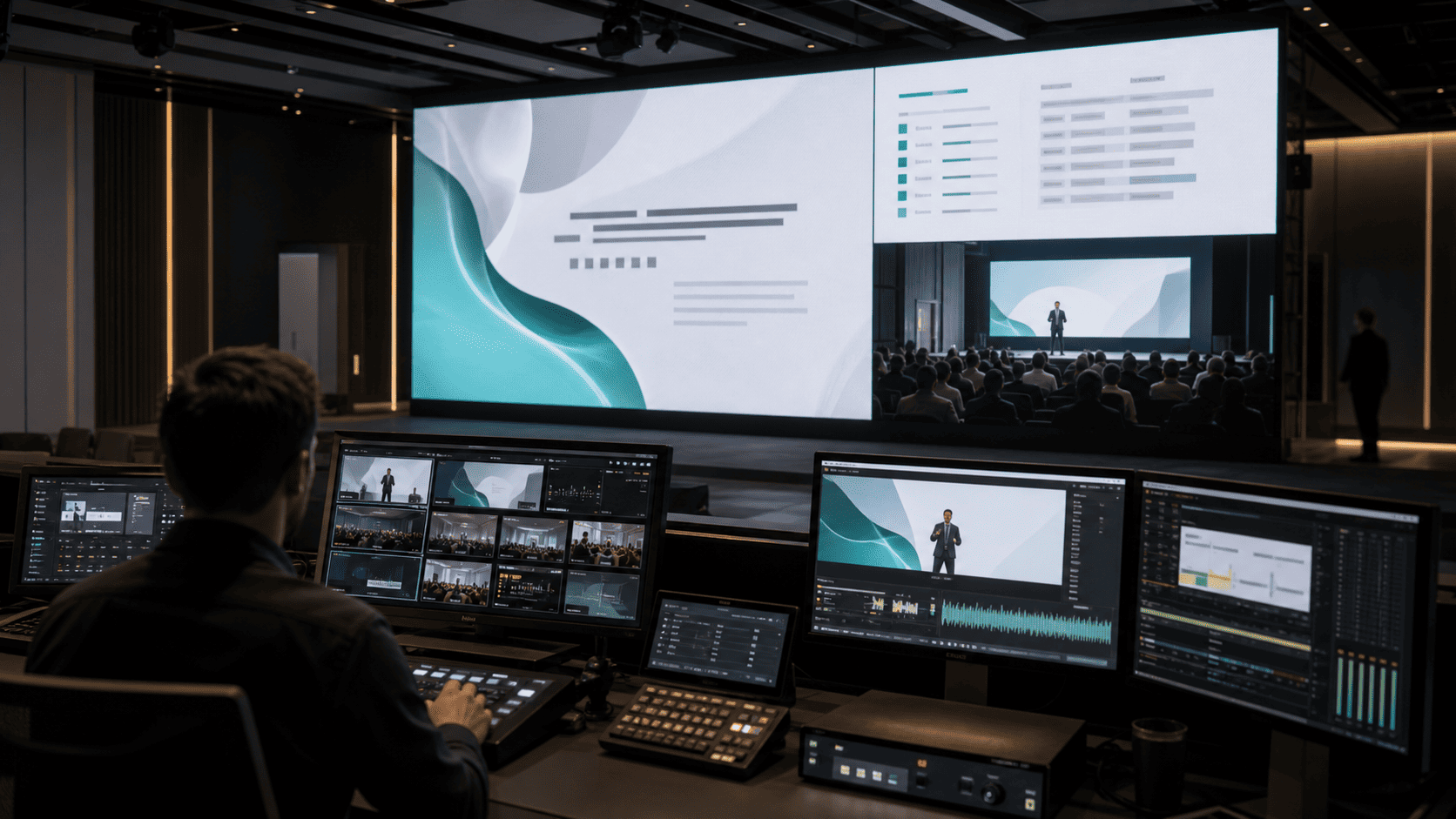
The wall is visible. The control path is responsible.
An LED wall often becomes the calmest object in the room. It stands there, wide and luminous, while the real pressure gathers behind it. A presenter changes laptops. A sponsor video arrives in the wrong format. A camera signal is needed for a short live segment. The audience should never see that scramble.
This is where an LED video controller or LED video processor earns its place. It is not there merely to accept a signal. It has to hold several decisions at once: which source goes live, how the image fills the canvas, whether a second window should appear, how quickly a preset can return, and whether the output route matches the LED screen system.
For Amoonsky, that conversation naturally sits around LED control and video processing products such as the VS, MVP and EX directions. The best article is not "which box should you buy." The better question is: what kind of control burden is the LED wall being asked to carry?
Presentation laptops, media playback, camera feeds, USB content and optional expansion inputs can all enter the conversation, depending on the product route and model.
The visible LED wall may need full-screen playback, picture-in-picture, picture-out-picture or up to four-window composition in supported routes.
Seamless switching, black/freeze functions, brightness adjustment and saved modes matter because live rooms punish slow decisions.
Inputs are not just ports. They are promises.
A spec sheet may list HDMI, DVI, VGA, AV, USB, DP or optional SDI. On paper, they look like inventory. In a real installation, every input represents a person or a workflow: the technician with a media server, the speaker with a laptop, the camera team, the emergency file on a USB drive, the extra source that appears five minutes before the doors open.
That is why a multi-source LED wall should be planned from the room outward. If the room is mostly presentations and simple playback, a practical controller route may be enough. If the room needs more front-end processing and dual DVI output, an MVP-style processor direction becomes easier to understand. If the project asks for 4K input-side handling, two-layer composition and up to four windows, an EX-style route begins to make sense.
The point is not to make every product sound the same. The point is to keep the signal story honest.
The operator sees time, not specs.
During a live handoff, nobody in the room is thinking about a feature list. The operator is watching the next source, the active output, the confidence monitor and the clock. A good control path turns that tense little moment into a clean gesture: preview, switch, hold, recover.
Functions such as seamless switching, preset save and recall, black screen, freeze, quick knob adjustment and audio-video synchronization are not decorative bullet points. They are small forms of mercy for the person at the control desk. When they work together, the LED wall feels composed even when the room is changing around it.
Operator logic: the system should not ask the operator to rebuild the room every time the next source changes. Saved modes, predictable switching and clear output planning are what turn a control desk from a panic surface into a working instrument.
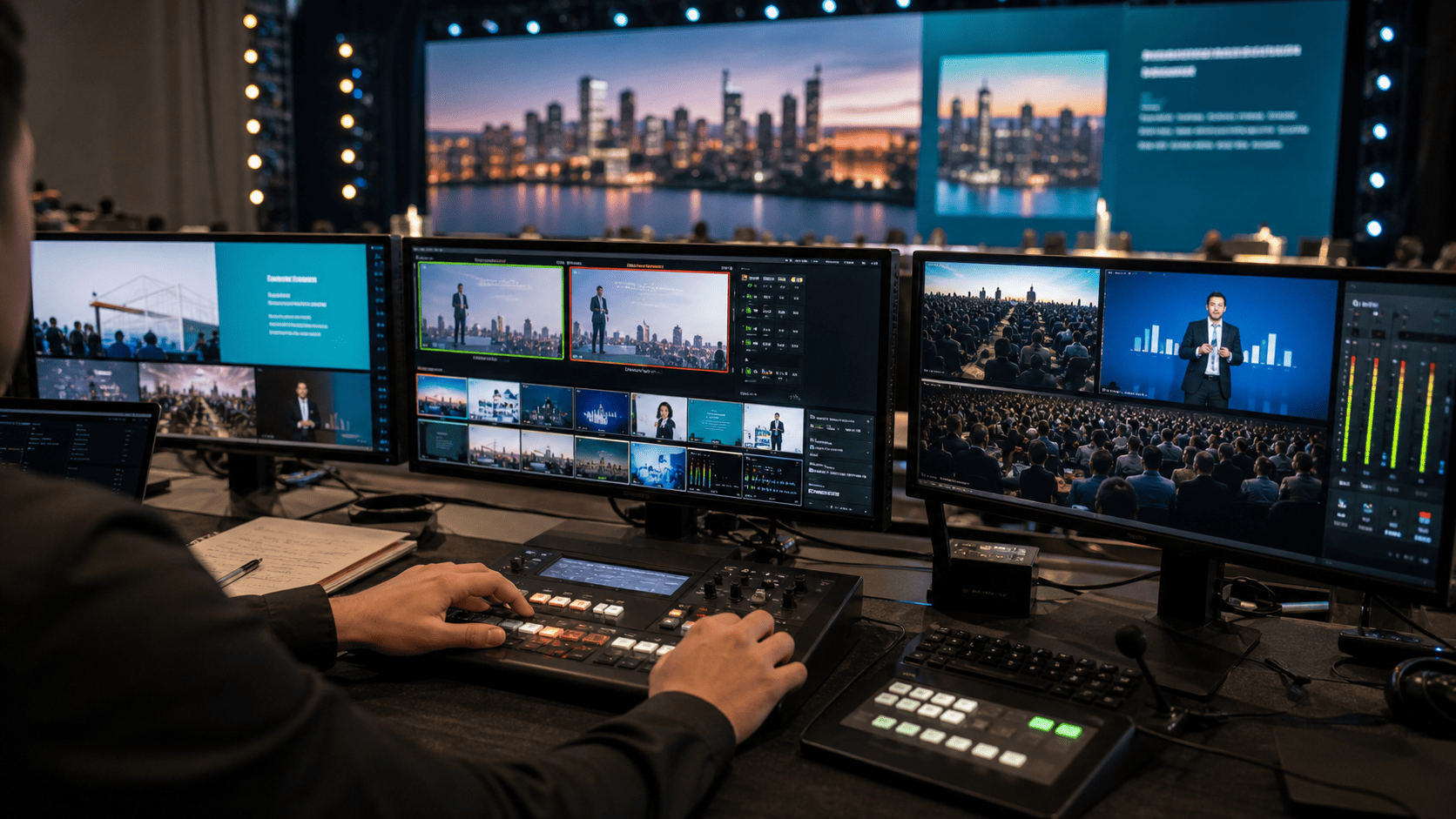
A stable LED show is rarely dramatic. That is the beauty of it. The right control path disappears into the event, and the audience remembers the message instead of the machinery.
Three routes behind the same screen
Amoonsky does not need to force one product name into every LED wall article. A more useful way to speak to buyers is to map the control burden to a product route.
Use this language when the article centers on integrated LED control, RJ45 sending output, multiple standard inputs, seamless switching and fast on-site operation. VS-series wording should stay close to the verified controller role and avoid borrowing unverified abilities from processor models.
Use this language when the project is more about front-end video processing, DVI output workflow, multi-window display, audio synchronization and support for sending-card installation. Do not rewrite this as an integrated sending-card promise unless the specific source says so.
Use this language when the article needs a 4K multi-window LED video controller direction: 3 HDMI and 2 DP inputs, 4 RJ45 Gigabit Ethernet outputs, 2 layers, up to 4 windows, custom EDID, custom output resolution and output monitoring. Optional SDI, USB and WiFi should remain optional or variant-specific.
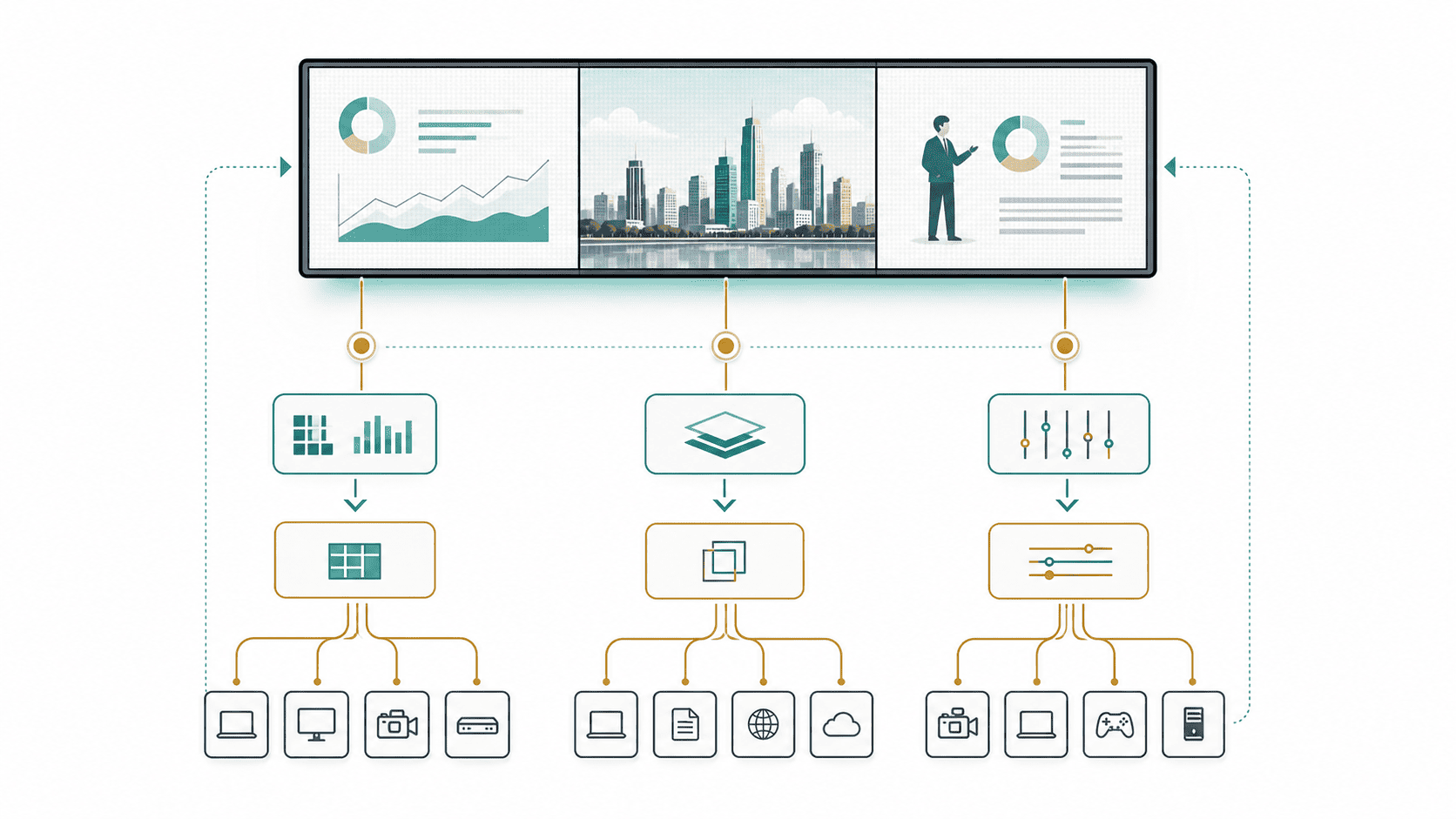
4K input is only the beginning
It is tempting to treat 4K as the headline and let the rest of the system become background. But in a real LED wall workflow, input resolution is only one part of the chain. The system still needs to decide how the image is scaled, how windows are arranged, how the output reaches the screen, whether the operator can save and recall modes, and which functions are standard rather than optional.
This is where Amoonsky content should be careful and useful at the same time. It can speak confidently about verified capabilities, but it should not turn every possible expansion into a universal promise. SDI, USB and WiFi routes may be valuable, but when they are extension or variant functions, the article should say so plainly.
What buyers should feel after reading
The best technical article leaves the reader less anxious. Not because it hides complexity, but because it gives complexity a shape. After reading, a buyer should understand that an LED display control system is not chosen by one glamorous specification. It is shaped by the room, the source count, the wall layout, the operator workflow and the output path.
Useful planning questions: How many live sources will the room actually use? Does the wall need single-screen playback or multi-window composition? Is RJ45 sending output part of the controller route, or is the processor feeding external sending hardware? Are SDI, USB or WiFi needs standard for the exact model, optional, or not part of the current product route?
When those questions are answered early, the LED wall stops being a risky final surface and becomes a planned part of the room.
Where Amoonsky fits
Amoonsky's LED control and video processing direction is strongest when the article speaks in systems: sources, switching, windows, outputs, presets and live operation. The VS direction can support integrated LED controller conversations. The MVP direction can support front-end LED video processing conversations. The EX direction can support 4K multi-window controller conversations where verified functions such as two layers, up to four windows and RJ45 output are relevant.
That gives customers a cleaner way to talk with the sales team. Instead of asking for "a processor," they can describe the room: the sources they need to handle, the LED wall they need to feed, and the control moments they cannot afford to get wrong.
Talk to Amoonsky about the control path behind your LED wall. Share your input sources, screen resolution direction, window layout needs and sending-output plan, and the product route can be matched with fewer assumptions and better confidence.